


His Story
Adam Miller grew up in a working-class family in New Jersey, where he learned early that work matters and respect should never depend on someone’s title. As a teenager, he stocked shelves, worked retail, waited tables, bartended, counseled kids, and even spent time on the floor of a steel factory. Those experiences shaped how he leads to this day: listen first, value every role, and earn trust through action.
That foundation carried into school and beyond. Adam developed a passion for leadership young, serving as student body president during a difficult moment in his community and learning how to bring people together under pressure. By age 25, he had earned degrees in law, business, and economics, while also passing the CPA and Series 7 exams. That unusual mix of experiences gave him a deep understanding of how systems work, and what happens when they fail the people they are supposed to serve.
Los Angeles became the place where Adam turned that mindset into a life. It is where he built his career, raised his family, and deepened his belief that this city’s future is worth fighting for.
1
Learning the value of work
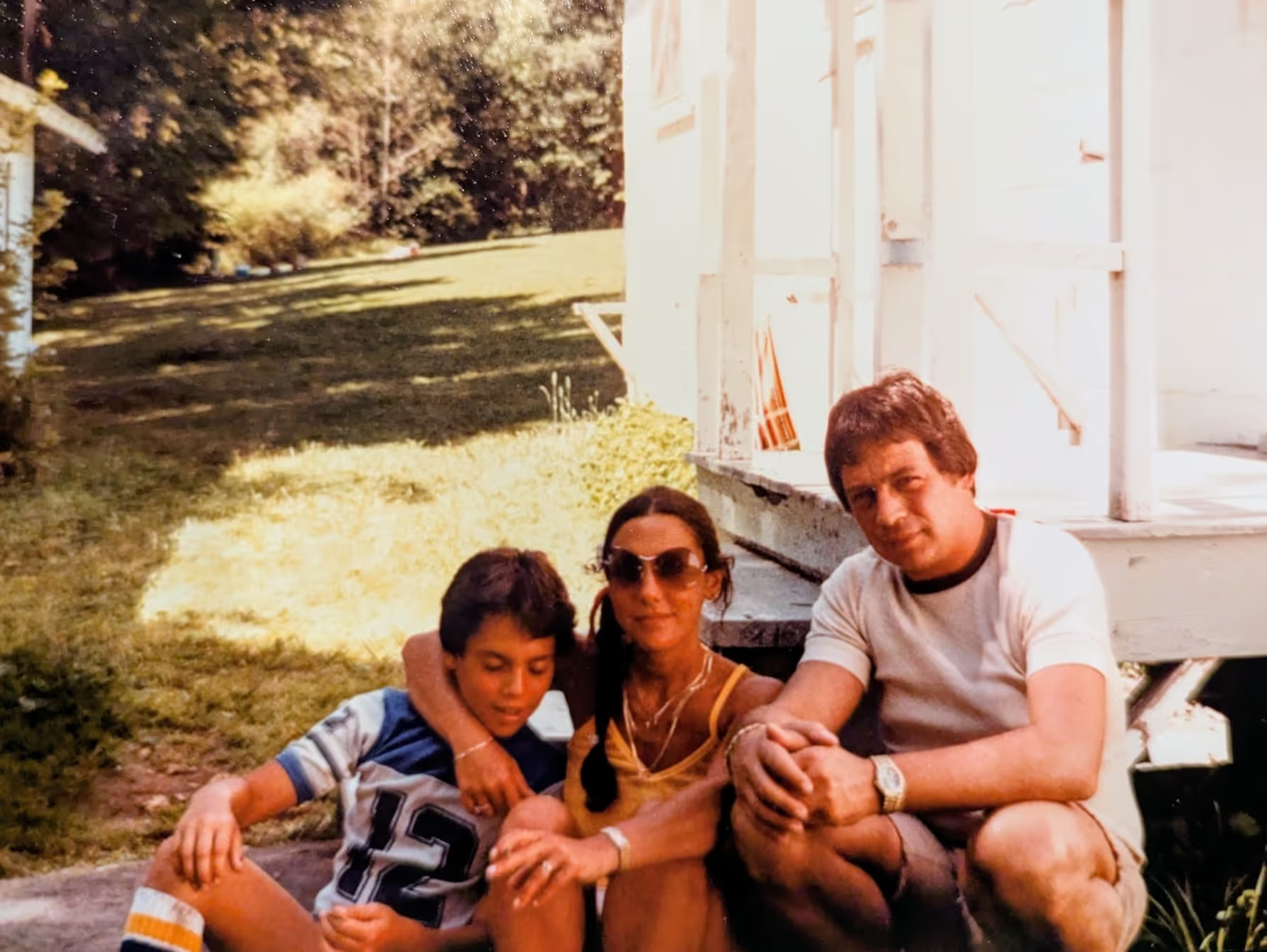
Adam grew up in a small town in New Jersey in a family that believed in showing up, working hard, and earning your way forward.
Adam’s father was an accountant. His mother was a school teacher. From the time he was sixteen, Adam worked stocking shelves at a grocery store, working retail, waiting tables, bartending, counseling kids, and even spending time on the floor of a steel factory before college.
Those early jobs taught him something lasting: every role matters, and people deserve respect whether they wear a suit, a uniform, or steel-toed boots.
2
Finding leadership early
Leadership didn’t come from a title, it came from responsibility.
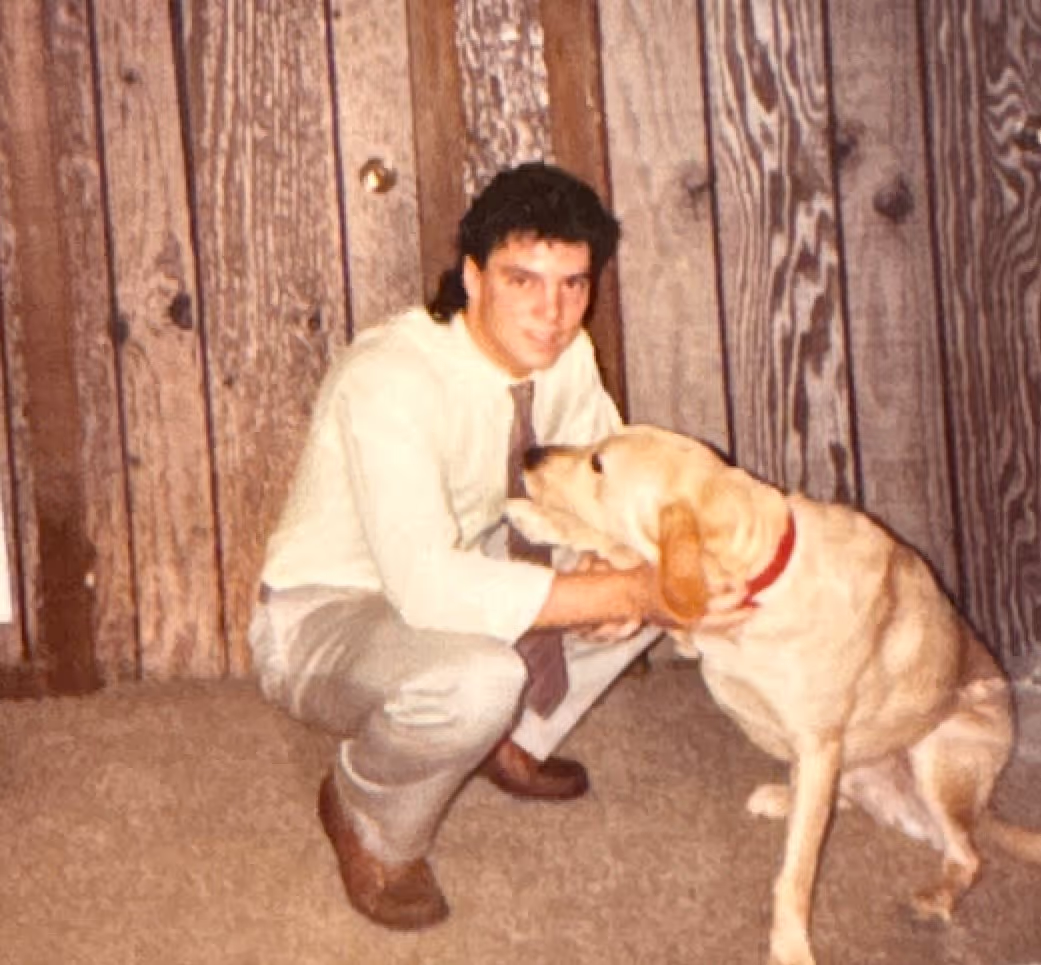
In high school, Adam balanced varsity sports with student leadership, eventually becoming student body president during a deeply divided moment for his community. Teachers and the school board were locked in conflict, and tensions ran high.
That experience shaped how Adam sees leadership to this day: listen first, bring people together, and find solutions that move everyone forward — even when it’s hard.
3
Education as a doorway
Education opened doors and taught Adam how to solve complex problems.
By the age of 25, Adam had earned a BA, BS, JD, and MBA, and passed the exams for both the CPA and Series 7. That mix of law, business, and economics gave him a deep understanding of how systems work — and how they fail people when they’re poorly designed.
At the same time, Adam developed an early connection to technology. Long before personal computing was widespread, he and a neighbor were experimenting with Intel 8086 computers at home — learning how technology could amplify human potential when used well.

Education gave me the tools to solve problems — not just talk about them.”
4
Building at scale
Adam didn’t just talk about ideas...
he built them.
At 29, after a brief stint in finance, Adam started his first company, Cornerstone OnDemand, from a one-bedroom apartment. The idea was simple but ambitious: expand access to education and opportunity through technology.
Cornerstone grew in Los Angeles into the world’s largest education technology company, scaling to more than 3,000 employees across 25 countries and empowering over 75 million people worldwide. The platform has delivered more than two billion courses to learners in 192 countries.
In 2021, Cornerstone was taken private in a $5.2 billion transaction — but the mission never changed: opportunity should be accessible, not exclusive.

5
Turning personal crisis into public impact
When his family faced a crisis, Adam turned it into action for others.
In 2008, Adam and his wife learned that one of their children had life-threatening food allergies. Suddenly, the gaps in support, research, and awareness became personal.
Adam stepped into leadership, helping merge FAAN and FAI to create FARE — now the world’s largest food allergy nonprofit. He has served on its board since the merger, helping expand clinical research, advance federal legislation, and support families nationwide.
He also helped build the UCLA Food Allergy Program and launched AllerFund, the first venture fund focused on food allergy companies.
6
Service, veterans, and crisis response
Service means showing up when things are hardest.
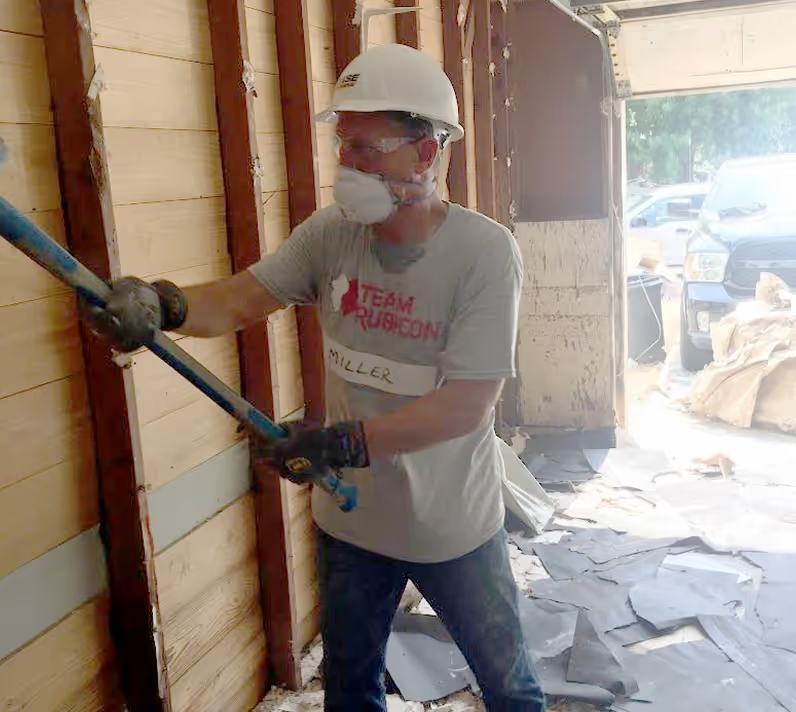
In 2013, Adam met a group of Marines with a bold idea: harness the skills of military veterans to respond to disasters while giving them renewed purpose. Adam served as Chairman of Team Rubicon from 2013 to 2020, helping grow it into a global humanitarian organization with over 150,000 volunteers — the majority veterans.
Team Rubicon now delivers disaster response across the U.S. and around the world, proving what’s possible when leadership trusts people and builds systems that work.
7
Showing up for Los Angeles
Los Angeles isn’t just where Adam works. It’s home.
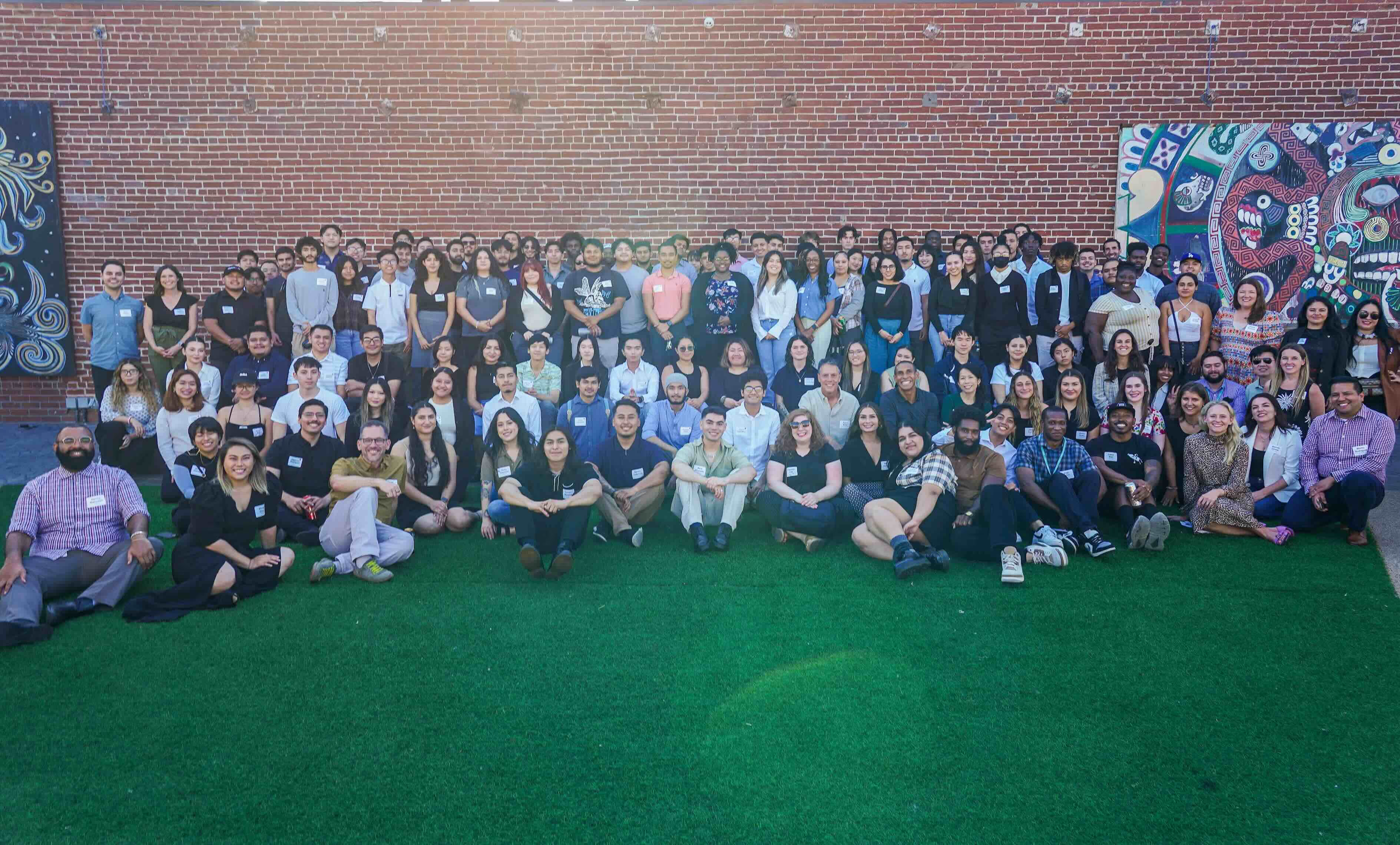
Adam founded LA-Tech.org to mobilize the city’s tech sector to give back. In 2020, after the murder of George Floyd, he helped launch the 1,000 Interns Initiative — offering paid pathways for students from underrepresented communities into LA’s leading companies. To date, more than 2,000 internships have been created.
8
Taking on hard problems
Taking on hard problems: Adam and Staci built a team to tackle the homelessness epidemic holistically
Through 1P.org and Better Angels, Adam has focused on some of LA’s toughest challenges — homelessness, gun violence, and community safety — combining compassion with pragmatism.
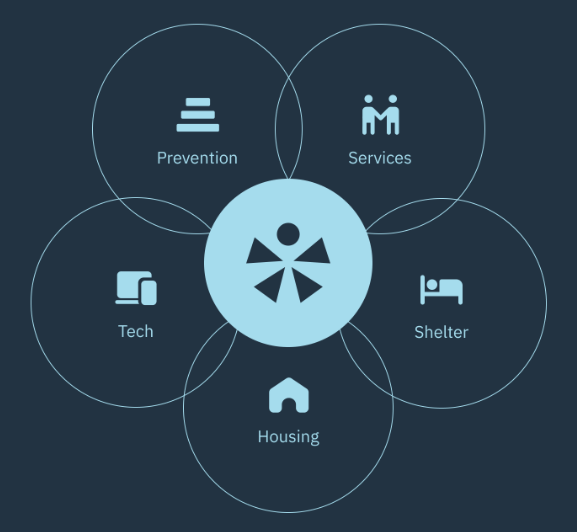
Better Angels’ mission is to solve LA’s homelessness epidemic by harnessing the power of the entire Los Angeles community. Its unique holistic approach to homelessness combines community engagement, advocacy, world-class technology, and a strong dose of pragmatism across five critical areas of need: Prevention, Services, Shelter, Housing, and Technology.
9
A Family Man.
An Angeleno.
At the center of everything is family.
Today, Adam lives in Los Angeles with his wife Staci and their children. When they’re together, they’re just like many LA families — spending time outdoors, watching games, laughing at familiar shows, and talking about the future.
Adam is running because that future should be possible here — for his kids, and for every family who wants to build a life in Los Angeles.